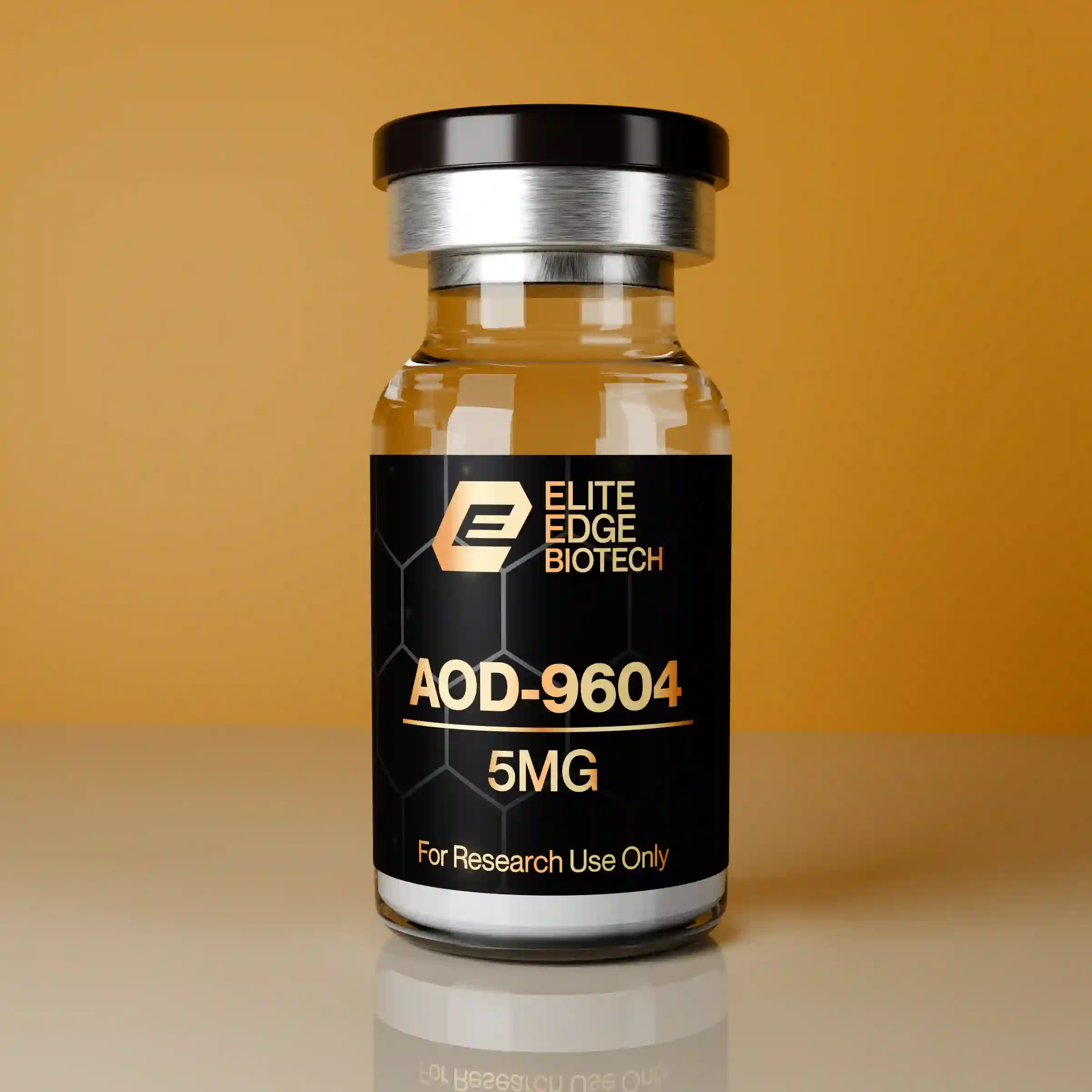
AOD-9604 is a synthetic 16-amino-acid peptide based on the C-terminal region of human growth hormone (hGH). It corresponds to hGH residues 177–191 with a tyrosine at the N-terminus, and it is often described as a modified hGH 176–191 fragment. A disulfide bridge between its two cysteine residues gives it a cyclic structure. It is studied in laboratory research on lipid metabolism and cell signaling in cell and animal models, and it is supplied as a lyophilized powder for researchers who need a documented, consistent compound.
This product is for laboratory research use only. It is not for human or veterinary use, and it is not a drug, food, supplement, or cosmetic. Buyers must be 21 or older.
Orders ship on business days. Place your order by 5 PM PT on a business day and it’s picked up by FedEx the same day. Orders placed after the cut-off ship the next business day.
Highlights
• Batch-specific certificate of analysis from Mz Lab
• 99.87% purity by HPLC-UV-MS
• Lyophilized for stability in transit and storage
• Discreet, protective packaging
Specifications
| Detail | Information |
|---|---|
| Compound name | AOD-9604 (Tyr-hGH 177-191) |
| Compound class | Synthetic peptide, modified hGH fragment |
| Sequence | Tyr-Leu-Arg-Ile-Val-Gln-Cys-Arg-Ser-Val-Glu-Gly-Ser-Cys-Gly-Phe (YLRIVQCRSVEGSCGF) |
| Form | Lyophilized powder |
| Quantity | 5mg per vial |
| Purity | 99.87% by HPLC-UV-MS |
| Molecular formula | C78H123N23O23S2 |
| Molecular weight | 1815.1 g/mol |
| CAS number | 221231-10-3 |
| Structure | Cyclic via a disulfide bridge between Cys7 and Cys14 |
| Appearance | White to off-white powder |
| Storage (unopened) | −20°C, protected from light and moisture |
| Intended use | In-vitro and preclinical laboratory research only |
Product Details
Overview
AOD-9604 is a synthetic peptide that mimics a short portion of the hGH molecule. Researchers use fragments like this to study whether specific regions of a large protein are responsible for particular cellular effects, without the full protein present.
AOD-9604 vs. Human Growth Hormone
AOD-9604 is not growth hormone. It is a small fragment, and in published preclinical work it was investigated specifically because it lacked the growth-promoting and insulin-related activity of the full hormone. Keep the two compounds distinct in your protocols and records.
Published Research Context
Preclinical studies have examined this fragment in rodent models of lipid metabolism. In one study, 14 days of treatment with hGH or AOD-9604 reduced body weight and fat in obese mice and restored adipose β3-adrenergic receptor expression to lean-mouse levels, while β3-adrenergic receptor knock-out mice did not show the same response to long-term treatment (Heffernan et al., 2001). A clinical development program for obesity was also pursued and was discontinued in 2007 after it did not produce results that supported approval. These findings do not establish safety or effectiveness for any use of this research compound in people.
References
Heffernan M, Summers RJ, Thorburn A, Ogru E, Gianello R, Jiang WJ, Ng FM. The effects of human GH and its lipolytic fragment (AOD9604) on lipid metabolism following chronic treatment in obese mice and β3-AR knock-out mice. Endocrinology. 2001;142(12):5182–5189. doi:10.1210/endo.142.12.8522
Purity and Quality Testing
Each batch is tested for identity and purity by HPLC and mass spectrometry. The current batch tested at 99.87% purity by HPLC-UV-MS. Compare the batch number on your vial label with the COA to confirm you are reading the right document.
Form and Packaging
The compound is supplied lyophilized in a sealed glass vial with a rubber stopper and cap. Lyophilization removes water, which improves stability during shipping and storage.
Solubility and Preparation
AOD-9604 is generally soluble in water. Sterile Reconstitution Water 3ml is a common starting diluent; confirm the recommended solvent on your COA or technical data sheet. Add the diluent slowly down the vial wall and swirl gently, because vigorous shaking can damage peptides.
Storage and Handling
Store unopened vials sealed at −20°C, dry and protected from light. Once reconstituted, peptide solutions are less stable than the dry powder. Aliquot into single-use volumes, avoid repeated freeze-thaw cycles, and follow your lab’s stability rules.
Shelf Life
Unopened, correctly stored vials remain stable until the expiry or retest date on the label.
Additional Information
What Is a Peptide Fragment?
Large proteins like growth hormone have several regions that may carry distinct activities. A peptide fragment reproduces one of those regions in isolation, which lets researchers test it independently. In AOD-9604, a tyrosine takes the place of the native phenylalanine at the N-terminal end of the hGH 176–191 sequence.
Why Documentation Matters for Peptides
Peptide quality varies with synthesis route, counter-ions, and residual solvents. With a cyclic peptide, the disulfide bond also needs to be correctly formed. A COA showing purity and identity gives you a traceable basis for reproducible work.
Practical Handling Notes
• Aliquot early. Divide the reconstituted stock into small portions.
• Record the exact solvent, volume, and date. Concentration depends on net peptide content, not just vial weight.
• Avoid reducing agents unless your protocol requires them. They can break the disulfide bridge.
• Document the batch number on every stock solution.
Sports and Compliance Note
AOD-9604 is named under growth hormone fragments (section S2) of the WADA Prohibited List. Researchers affiliated with sports organizations should check the current list and their organization’s rules before ordering.
Reviewed by Bruno M.
Why Choose Our AOD-9604
Reliable research depends on knowing exactly what is in the vial. Inconsistent purity or poor documentation adds variables that are hard to detect and expensive to repeat.
Card 1 – Documented quality: Every batch ships with a batch-specific COA; the current batch tested at 99.87% purity by HPLC-UV-MS.
Card 2 – Built for stability: Lyophilized, sealed, and shipped with protective packaging to preserve integrity.
Disclaimer
This product is intended for in-vitro and preclinical laboratory research only. It is not for human consumption, injection, ingestion, or any clinical, diagnostic, or therapeutic use. It is not a drug, food, dietary supplement, or cosmetic, and it has not been evaluated by any regulatory authority for use in people or animals. Statements on this page refer to preclinical research and are not claims of safety or effectiveness. Buyers are responsible for lawful handling, storage, and use, and by purchasing confirm they are 21 or older and qualified to handle laboratory materials.