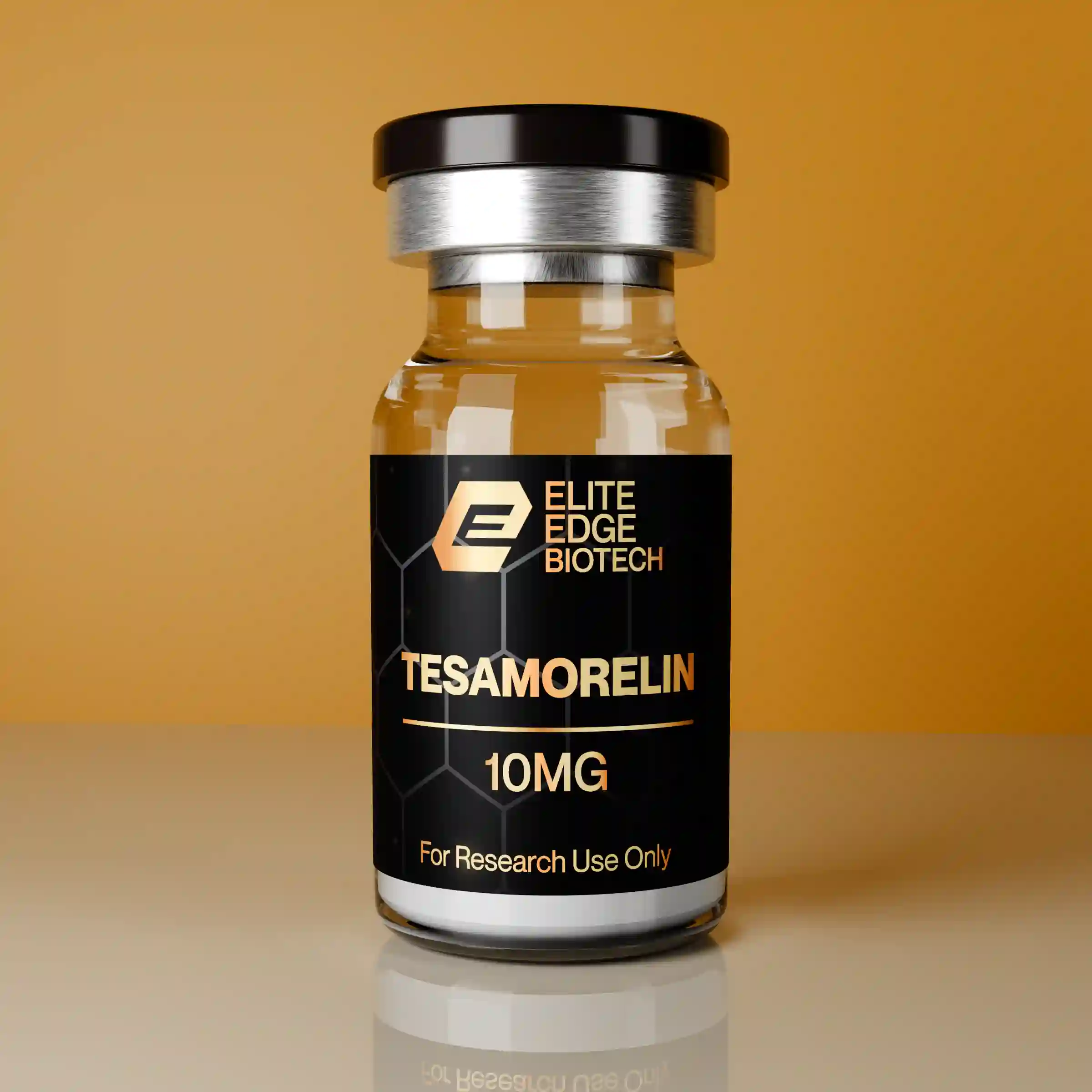
Tesamorelin is a synthetic 44-amino-acid analog of human growth hormone-releasing hormone (GHRH) studied in laboratory research on GHRH receptor signaling and the growth hormone axis. It is supplied as a lyophilized powder for researchers who need a consistent, documented peptide for experimental work.
This product is for laboratory research use only. It is not for human or veterinary use, and it is not a drug, food, supplement, or cosmetic. Buyers must be 21 or older.
Orders ship on business days. Place your order by 5 PM PT on a business day and it’s picked up by FedEx the same day. Orders placed after the cut-off ship the next business day.
Highlights
• Batch-specific certificate of analysis from Mz Lab
• 99.98% HPLC purity, identity confirmed by HPLC-MS
• Lyophilized for stability in transit and storage
• Discreet, protective packaging
Specifications
| Detail | Information |
|---|---|
| Compound name | Tesamorelin ([trans-3-hexenoyl]-hGHRH(1-44)-NH2) |
| Compound class | Synthetic GHRH analog peptide (44 amino acids) |
| Form | Lyophilized powder |
| Quantity | 10mg & 20mg per vial |
| Purity | 99.98% by HPLC (batch 2026-07-22) |
| Identity | Confirmed by HPLC-MS |
| Molecular formula | C221H366N72O67S |
| Molecular weight | 5135.86 g/mol |
| CAS number | 218949-48-5 (free base) |
| Appearance | White to off-white lyophilized powder |
| Storage (unopened) | -20°C, protected from light and moisture |
| Intended use | In-vitro and preclinical laboratory research only |
Product Details
Overview
Tesamorelin is a synthetic peptide built on the full 44-amino-acid sequence of human GHRH. A trans-3-hexenoyl group is attached at the N-terminus. This modification makes the peptide more resistant to cleavage by dipeptidyl aminopeptidase IV than native GHRH, giving researchers a more stable tool for studying GHRH receptor activity.
Mechanism of Interest
GHRH acts on GHRH receptors in the anterior pituitary, where it stimulates the synthesis and release of growth hormone (GH). GH in turn drives production of insulin-like growth factor 1 (IGF-1). Researchers use stabilized GHRH analogs like Tesamorelin to probe this GHRH–GH–IGF-1 axis in controlled cell and animal models.
Published Research Context
Non-clinical studies characterized Tesamorelin (studied under the code TH9507) as a GHRH analog that stimulated growth hormone release and raised IGF-1 levels in animal models, with greater stability than native GHRH (Ferdinandi et al., 2007). These findings are preclinical and come from controlled laboratory and animal research. They do not establish safety or effectiveness for any use of this research compound in people.
References
Ferdinandi ES, Brazeau P, High K, Procter B, Fennell S, Dubreuil P. Non-clinical pharmacology and safety evaluation of TH9507, a human growth hormone-releasing factor analogue. Basic & Clinical Pharmacology & Toxicology. 2007;100(1):49–58. doi:10.1111/j.1742-7843.2007.00008.x
Purity and Quality Testing
Each batch is tested for identity and purity. The current batch (2026-07-22, tested August 5, 2026) showed 99.98% purity by HPLC, with identity confirmed by HPLC-MS. Compare the batch number on your vial label with the COA to confirm you are looking at the right document.
Form and Packaging
The peptide is supplied lyophilized in a sealed glass vial with a rubber stopper and cap. Lyophilization removes water, which improves stability during shipping and storage.
Solubility and Preparation
Tesamorelin is generally soluble in aqueous solutions. Confirm the recommended solvent from your COA or technical data sheet, and follow your own validated protocol. For aqueous work, sterile diluent such as our Reconstitution Water 3ml may be used where appropriate.
Storage and Handling
Store unopened vials at -20°C, dry and protected from light. Once reconstituted, follow your laboratory’s stability guidelines and avoid repeated freeze-thaw cycles. Discard vials with damaged seals, discoloration, or signs of moisture ingress.
Shelf Life
Unopened, correctly stored vials remain stable until the expiry or retest date on the label.
Additional Information
What Is GHRH?
Growth hormone-releasing hormone (GHRH) is a hypothalamic peptide hormone that signals the pituitary gland to produce and release growth hormone. Native GHRH is broken down quickly by enzymes, which limits its usefulness in many experimental settings.
Why Researchers Use Stabilized GHRH Analogs
Stabilized analogs such as Tesamorelin resist enzymatic breakdown, so researchers can study GHRH receptor signaling over longer, more consistent time frames. A well-characterized peptide with documented purity helps keep experiments reproducible.
Research Handling Note
Weigh and handle the powder in a controlled environment, using appropriate personal protective equipment. Record the batch number, the date of reconstitution, and the exact solvent and volume used so that your results stay traceable.
Reviewed by Bruno M.
Why Choose Our Tesamorelin
Reliable research depends on knowing exactly what is in the vial. Inconsistent purity or poor documentation introduces variables that are hard to detect and expensive to repeat.
Card 1 – Documented purity: Every batch ships with a batch-specific COA; the current batch tested at 99.98% by HPLC with identity confirmed by HPLC-MS.
Card 2 – Built for stability: Lyophilized, sealed, and shipped with protective packaging to preserve integrity.
Disclaimer
This product is intended for in-vitro laboratory research only. It is not for human consumption, injection, ingestion, or any clinical, diagnostic, or therapeutic use. It is not a drug, food, dietary supplement, or cosmetic, and it has not been evaluated by any regulatory authority for use in people or animals. Statements on this page refer to preclinical research and are not claims of safety or effectiveness. Buyers are responsible for lawful handling, storage, and use, and by purchasing confirm they are 21 or older and qualified to handle laboratory materials.