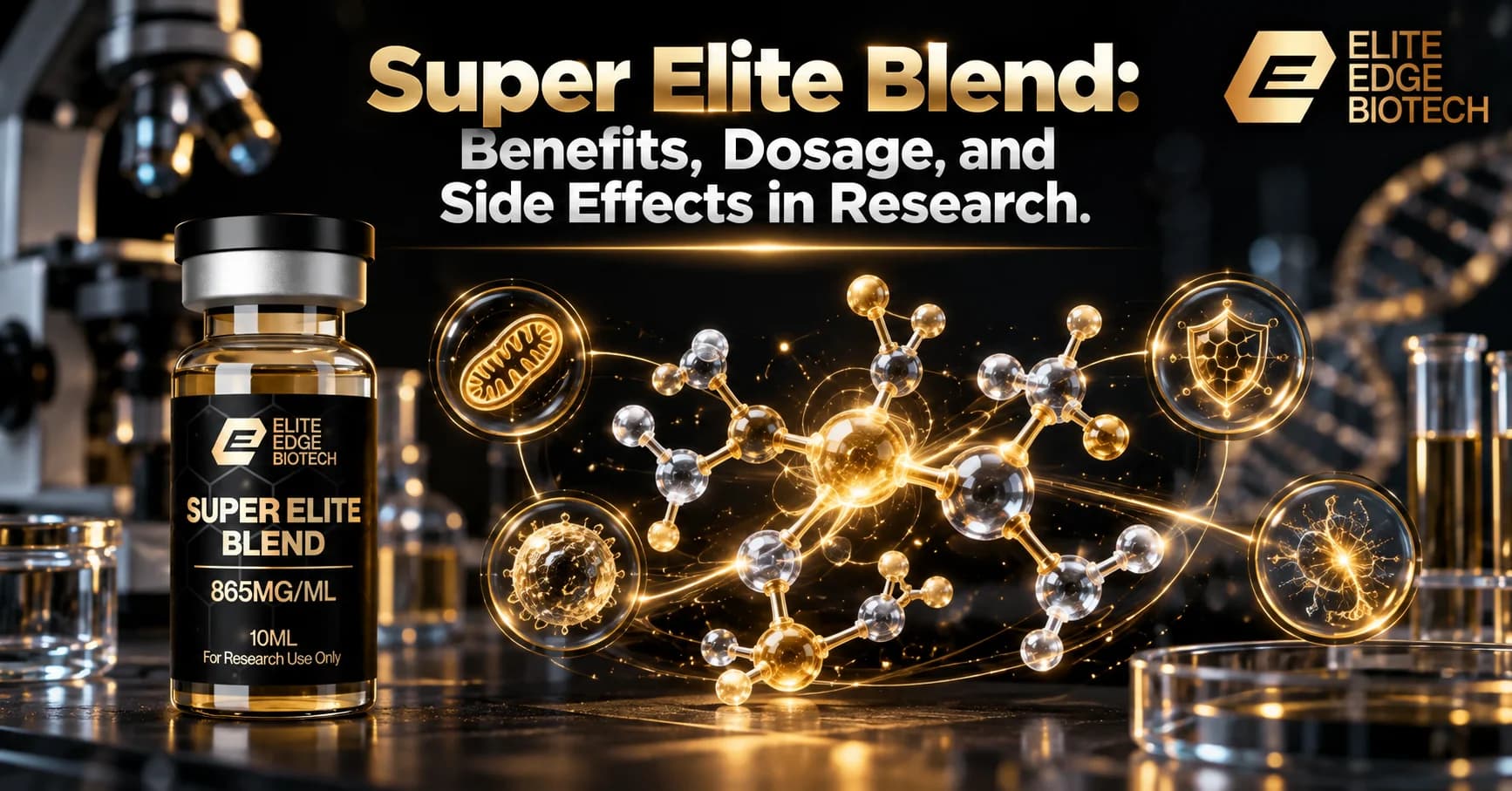
Super Elite Blend is a mix of nine different amino acids, each one studied on its own in labs around the world. Amino acids are the small building blocks that make up proteins, and each one in this blend has a different job in the body’s systems. This article breaks down what each ingredient is, what research says about it, and how study designs differ — all explained in simple terms.
What’s In the Blend?

Here are the nine ingredients and their amounts in this blend:
- L-Arginine — 110 mg
- L-Ornithine — 110 mg
- L-Citrulline — 120 mg
- L-Lysine — 70 mg
- L-Glutamine — 40 mg
- L-Proline — 60 mg
- L-Taurine — 60 mg
- L-Carnitine — 220 mg
- NAC (N-Acetylcysteine) — 75 mg
How Does This Blend Work?

Instead of one single ingredient, this blend combines several amino acids that researchers have studied together because of how their pathways connect in the body.
L-arginine is broken down in cells to create nitric oxide, or it can be converted into L-citrulline and L-ornithine through different chemical pathways. This means these three ingredients are closely linked — like three stops on the same train line — and that’s likely why they’re grouped together in this formula.
Research Areas by Ingredient
1. Arginine, Ornithine, and Citrulline — Blood Flow and Growth Hormone Research L-arginine and L-ornithine are amino acids involved in the urea cycle, along with L-citrulline, and are commonly studied in research related to strength training and athletic performance. Some research trials have looked at whether arginine and ornithine supplementation can raise growth hormone and IGF-1 levels after intense resistance exercise in trained study groups, though results across different studies have varied.
Citrulline research has also expanded into other areas. Studies have found that L-citrulline supplementation can increase plasma levels of citrulline, ornithine, and arginine, while also supporting antioxidant activity and reducing markers of inflammation in animal models.
2. Lysine — Growth Hormone Research Ornithine, arginine, and lysine are believed by some researchers to be stronger triggers for growth hormone release compared to other amino acids, which is why lysine often appears alongside arginine and ornithine in these types of research blends.
3. Glutamine — Gut and Immune-Related Research L-glutamine appears in research on glutathione, an antioxidant. Glutamine is one of the most common amino acids studied for its role in gut and immune-related research.
4. Taurine and NAC — Antioxidant Research Taurine and NAC are frequently studied together because of overlapping antioxidant actions. Research comparing NAC, hypotaurine, and taurine found that these compounds showed similar patterns of protection against liver stress in animal study models, even though they have different chemical structures.
NAC on its own has one of the largest research libraries of any amino-acid-related compound. NAC acts as a source of sulfhydryl groups in cells and works as a scavenger of reactive molecules such as free radicals, and recent research reviews describe NAC as having wide-ranging effects on inflammation pathways and multiple signaling systems in ongoing preclinical and clinical research.
5. Carnitine — Metabolism Research L-carnitine and acetyl-L-carnitine have been studied in research related to how the body’s cells produce and use energy, particularly in muscle tissue studies. Carnitine research often overlaps with studies on aging and cellular energy production.
6. Proline — Tissue Research Proline is a key building block used in collagen, the protein that makes up a large part of connective tissue. It is commonly included in amino acid research blends focused on tissue-structure studies, though it has fewer large-scale standalone research trials compared to the other ingredients in this blend.
How Study Designs Differ

The amounts of each amino acid used in published research vary with the study’s design and goal, and with whether the study was done in cells, animal models, or supervised clinical trials.
Amounts used in research settings were set and monitored by trained researchers under controlled conditions. Many published studies tested several amino acids together rather than one ingredient alone, which is part of why blended formulas like this one are of interest to researchers studying combined effects.
Why This Blend Is Complex to Study

Because this blend blends several amino acids with different jobs, researchers note several study-design challenges:
- Review studies note that findings can differ a lot depending on study method, so results from one design do not always carry over to another.
- Research on NAC and taurine in animal models has measured antioxidant markers in organ tissue.
- Because arginine, ornithine, and citrulline share the same metabolic pathway, researchers note that the effects of one ingredient can shift the levels of the other two, which is something study designs need to account for.
Key Takeaways
- Super Elite Blend combines nine amino acids, several of which are linked through the same metabolic pathway (arginine, ornithine, citrulline).
- Research on this group spans growth hormone studies, antioxidant research, metabolism research, and tissue-structure studies.
- Many positive findings in published studies come from combinations of amino acids rather than single-ingredient testing.
- Amounts used in research vary widely by study design and were set under controlled research conditions.
Conclusion
Super Elite Blend brings together amino acids that researchers have studied for decades, from the urea-cycle trio of arginine, ornithine, and citrulline to well-known antioxidants like NAC and taurine. What makes this kind of blend interesting to researchers is exactly what makes it complex to study — these ingredients interact with each other inside the body’s own metabolic pathways, so their combined effects aren’t always the same as testing each one alone. As research on amino acid combinations continues, formulas like this one remain a active area of ongoing scientific study.
All technical and descriptive information on this website is provided for research, educational, and informational purposes only. The products and any statements made about them have not been evaluated by the U.S. Food and Drug Administration. The products are not intended to diagnose, treat, cure, or prevent any disease or medical condition.
Elite Edge Biotech is a chemical supplier. Elite Edge Biotech is not a compounding pharmacy or chemical compounding facility as defined under section 503A of the Federal Food, Drug, and Cosmetic Act and is not an outsourcing facility as defined under section 503B of the same Act.
By purchasing from Elite Edge Biotech, you agree that all products will be used in accordance with applicable laws and regulations, and that you assume full responsibility for their use in appropriate research settings only.